Passwords are an essential part of our digital lives. From accessing email accounts to conducting online banking transactions, they protect us from unwanted intrusions and ensure the security of our personal information. But where exactly do passwords come from? How has this practice developed over time? Let's explore this fascinating history of digital security.
The Emergence of Passwords
The emergence of passwords dates back to ancient times, long before the digital age we live in today. The need to protect confidential information and restrict access to certain resources has always been a concern for human societies throughout history. Although digital passwords as we know them today did not exist in antiquity, the basic principles of authentication and data security have deep roots in various ancient civilizations.
One of the earliest forms of authentication dates back to ancient Egypt, where scribes used personal seals to authenticate important documents. These seals, often engraved with hieroglyphs or unique symbols, served as a primitive form of identification and authentication.
In Ancient Greece, the use of recognition signals was common among military forces. Soldiers used keywords or secret phrases to identify allies amidst the chaos of battle. This type of authentication, while not directly comparable to today's digital passwords, shares the same underlying principle of verifying identity to allow access to restricted resources.
However, it was during medieval times that the concept of passwords truly began to resemble what we have today. Castles and fortresses were protected by guards who required travelers to provide a keyword or secret phrase to gain access. These passwords were shared only among those who needed authorized access and served as a barrier against invaders and spies.
With the advent of the printing press and the spread of writing, passwords began to be used in a variety of contexts, from artisan guilds to social clubs. However, it was only with the rise of computing and the digital age that passwords became a ubiquitous part of our daily lives.
Beginning in the 1960s, with the first computers and time-sharing systems, the need for user authentication became evident. Operating systems began implementing login methods that required users to enter a password to access their terminals. These early passwords were often simple, usually consisting of a single word or combination of letters.
Over time, as computers became more powerful and systems more complex, passwords also evolved. Cryptography and hashing techniques were developed to store passwords more securely in systems, making them less vulnerable to hacker attacks and security breaches.
The Computer Age
With the advancement of technology and the emergence of personal computers in the 1970s, the need to protect digital data became increasingly evident. Operating systems began to implement password-based authentication methods to control access to information stored on devices.
The First Passwords
Early passwords were simple and usually consisted of a single word or a combination of letters and numbers. However, with the increasing complexity of systems and the growing sophistication of cyberattacks, it became necessary to develop more secure authentication methods.
Cryptography and Hashing
With advancements in cryptography and hashing techniques, passwords began to be stored more securely in systems. Instead of storing passwords in plain text, they began to be encrypted using complex mathematical algorithms. This made it much more difficult for attackers to access passwords, even if they managed to gain access to databases.
The Internet Age
With the popularization of the Internet in the 1990s, the use of passwords became even more widespread. People now needed passwords not only to access their personal computers, but also to connect to online services such as email, social networks, and e-commerce systems.
The Challenges of Digital Security
As more services migrated to the online environment, digital security challenges also increased. Social engineering, phishing, and other attack techniques became common, aiming to steal users' passwords and confidential information. This led to the need to develop more advanced methods of authentication and data protection.
Multifactor Authentication
One of the most effective solutions for mitigating security risks associated with passwords is multi-factor authentication (MFA). With MFA, users need to provide not only a password but also a second form of authentication, such as a code sent to their mobile devices. This adds an extra layer of security, making it more difficult for attackers to access protected accounts.
Passwords of the Future
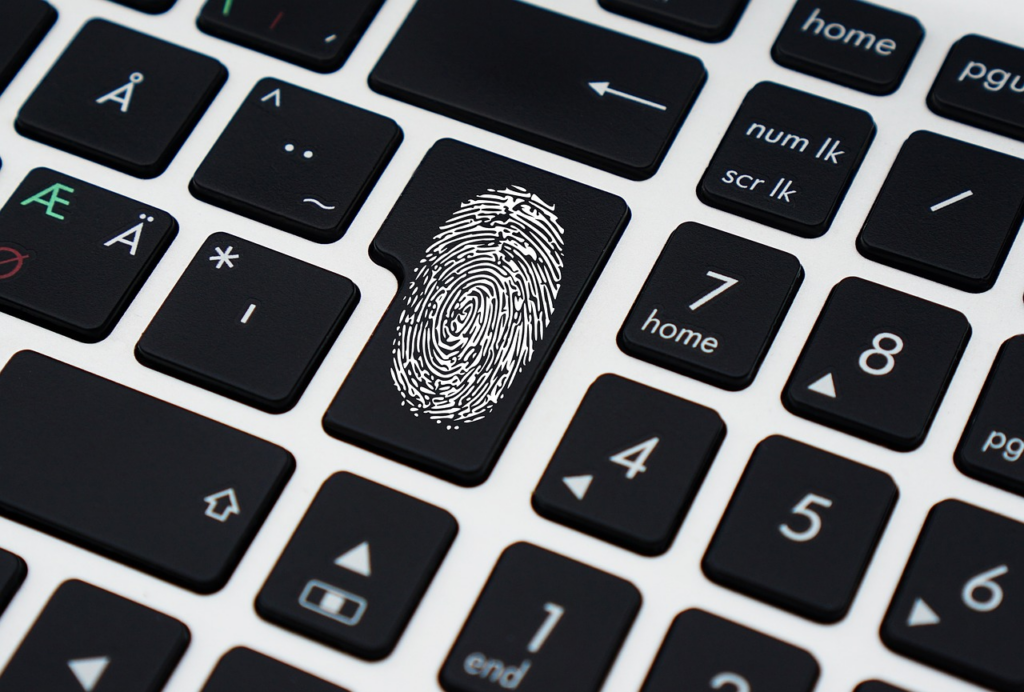
As technology continues to evolve, passwords are likely to undergo further changes. Biometrics, such as fingerprints and facial recognition, are becoming increasingly common as authentication methods. Furthermore, advancements in artificial intelligence and machine learning may lead to the development of even more advanced and secure authentication systems.
A key role in digital security.
Passwords play a fundamental role in digital security, protecting our personal information and ensuring the integrity of our online accounts. Throughout history, they have undergone several evolutions, from simple keywords to advanced multi-factor authentication methods.
However, with ongoing cybersecurity challenges, it is important to continue innovating and developing new techniques to protect our data in the ever-changing digital world.
See also: When can I withdraw my FGTS withheld? See information
March 28, 2024

Graduated in Literature – Portuguese/English, and creator of the website Successful Writer, seeks to expand everyone's knowledge with relevant information on a variety of topics, as a writer. At Vaga de Emprego RJ, she provides opportunities and tips on the job market.